Description
Those who write history determine its narrative, whether through written text or through the visual language of art and public monuments. Power, Image, and Memory examines a wide variety of artistic traditions, showing how art commemorating historical events can shape collective memory, and with it, the identities of social groups and nations. From the Mesopotamians to the present day, leaders and societies have used art to frame and memorialize important events. This account establishes a dialogue among traditions in a series of case studies, ranging from the reliefs at Ramses' temple at Abu Simbel and the ancient Greek "Alexander Mosaic" to the Heian Period Japanese scroll of the Night Attack on the Sanjo Palace, the Benin Bronzes, Diego Vel?zquez's Surrender at Breda, and Picasso's Guernica. Weaving together meticulous historic detail, theory, and visual analysis, this volume offers a complex picture of the power of art and memory, as well as of the life of these monuments and messages over time, distanced from their original cultures and context. With insights relevant to contemporary debates reexamining historic monuments, Power, Image, and Memory sheds new light on the power of art to shape social memory and identity.
Table of Contents
IntroductionChapter OneThe Victory Stele of Naram-S?n:The Genesis of a Commemorative TraditionChapter TwoThe Temple of Ramses II at Abu Simbel:Message Control in Ancient EgyptChapter ThreeThe Alexander Mosaic:Democracy and Dynasty in Greek Commemorative PracticeChapter FourThe Column of Trajan:Images of Power at Empire's Center and EdgeChapter FiveThe Bayeux Embroidery:Threads of Memory in Medieval EnglandChapter SixThe Night Attack on the Sanjo Palace:Unscrolling the Warrior Ethos in Medieval JapanChapter SevenThe Battle of San Romano:Painting and the Perpetuation of Memory in Renaissance FlorenceChapter EightThe Benin Plaques:Displaced Memories of an African EmpireChapter NineThe H?nername:Identity and Legacy at the Ottoman CourtChapter TenThe Surrender of Breda:Private Memory and Public Gesture in Baroque SpainChapter ElevenThe Death of General Wolfe:Fashioning Imperial and Colonial Identities in the AmericasChapter TwelveGuernica:Modernism and Picasso's "Blasted Allegory"ConclusionsInto the History of ArtBibliographyIndex


-

- 洋書電子書籍
- コミュニティ・公衆衛生看護(第4版)<…

-
- 和書
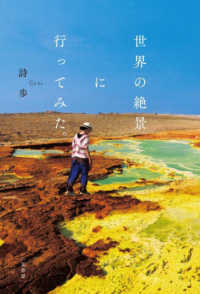
- 世界の絶景に行ってみた。