
Description
This book scrutinizes the entire disaster trajectory history in the Republic of Korea: evolution, cross-over, and interconnection among natural, technological, and social disasters. Also examined is the governmentâs dynamic reaction for effective disaster responses in the wake of major disasters, labelled as focusing events, distributed in the long tail of the power law function. Collating one nationâs entire disaster history, its disaster management policies, and its responses to major disasters is a unique journey into that nationâs evolution. Korea rose from devastation in the 1950s to become one of the most economically and politically dynamic nations by the turn of the century. However, with rapid growth has come all types of disasters. Looking at the lessons learned from Koreaâs disaster risk management measures, policies, and responses, as well as some of the worldâs major disasters, we can gain insight into the future of disaster risk management.
This book is intended to lay out developing nationsâ potential future disaster risk management path, a theoretical policymaking guide, and desirable institutional and organizational transformations. Effective countermeasures included in this book will guide policymakers, capacity builders, and academics in developing nations to avoid the disaster path in the near future at the cost of rapid economic growth that Korea faced.
Table of Contents
Overview and Historical Review.- Disaster Theory.- Disasters from 1948 to 2015 in Korea and Power-law Distribution.- Focusing Events in the Power-law Distribution.- Disaster Response Policy Change in the Wake of Major Disasters, Labeled Focusing Events.- Disaster Resilient Future in Korea.

-

- 洋書電子書籍
- 大量生産の技術(第2版):素材、プロセ…
-

- 洋書電子書籍
- ノンパラメトリック統計学と理工系への応…
-
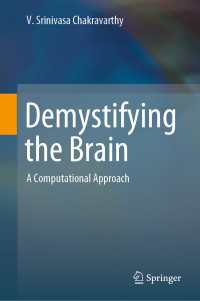
- 洋書電子書籍
-
神経科学への計算論的アプローチ
…
-
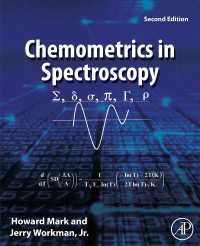
- 洋書電子書籍
-
分光法ケモメトリクス(第2版)
…
-

- 洋書電子書籍
-
危機管理における危険の緩和
Ha…



