Full Description
We Make Each Other Beautiful focuses on woman of color and queer of color artists and artist collectives who engage in direct political action as a part of their art practice. Defined by public protest, rule-breaking, rebellion, and resistance to governmental and institutional abuse, direct-action "artivism" draws on the aims, radical spirit, and tactics of the civil rights and feminist movements and on the struggles for disability rights, queer rights, and immigrant rights to seek legal and social change.
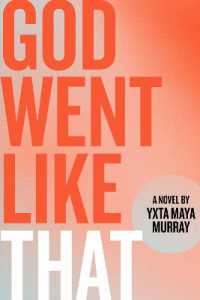
Yxta Maya Murray traces the development of artivism as a practice from the Harlem Renaissance to Yoko Ono, Judy Baca, and Marsha P. Johnson. She also studies its role in transforming law and society. We Make Each Other Beautiful profiles the work and lives of four contemporary artivists —Carrie Mae Weems, Young Joon Kwak, Tanya Aguiñiga, and Imani Jacqueline Brown—and the artivist collective Drawn Together, combining new oral histories with sharp analyses of how their diverse and expansive artistic practices bear important aesthetic and politicolegal meanings that address a wide range of injustices.
Contents
Introduction
1. Artivism Avant La Lettre
2. From Here I Saw What Happened and I Cried: Carrie MaeWeems' Challenge to Copyright and Property Law
3. "I just didn't feel safe, but I don't feel safe a lot of times in alot of different places:": Young Joon Kwak's Mutant Salon andthe queer need for safer and thriving spaces
4. "How did we get here?": Tanya Aguiñiga's art about theborder and disability law
5. "There are so many stories like that, too, of the governmentand private companies relinquishing their responsibility to thepeople of New Orleans, who had lost everything":: Imani Jacqueline Brown, Blights Out, and Live Action Painting(2015
6. "We wanted to open up and surpass those usualunderstandings:": Drawn Together and fair artists' contracts
Conclusion: An art dedicated to survival: Art, law, hope, and the wayahead