Description
**Selected for 2026 Doody's Core Titles in Emergency Medicine**Covering everything from airway management and ventilation, wound care, and cardiac procedures to resuscitation, diagnostic imaging, and sedation, Roberts and Hedges' Clinical Procedures in Emergency Medicine and Acute Care, Eighth Edition, provides the practical, highly visual information you need in emergency medicine and acute care practice. Comprehensive, detailed, and up to date, this copiously illustrated reference describes in detail both the common and uncommon procedures you're likely to consider (how, why, when to, and when not to perform them), as well as recommends other emergency or acute care procedures that may be an option. For clinicians at all levels of experience, this fully revised 8th Edition remains the most well-known and trusted procedures manual in its field.- Covers the latest equipment, devices, drug therapies, and techniques you need to know for the effective practice of emergency medicine and acute care.- Includes Procedure Boxes that depict entire procedures at a glance, functioning as a mini-atlas that allows you to quickly grasp how to perform a procedure.- Contains more than 3,500 images, including new color photographs, Ultrasound Boxes, and new algorithms.- Covers hot topics such as evaluation of patients with implantable devices, management of patients with cardiac assist devices, and care of patients after cosmetic procedures, as well as procedures performed by acute care practitioners such as sedation of the agitated patient, alternate methods of drug delivery, and common errors and complications in the acute care setting.- Includes over 250 video clips (many new to this edition) demonstrating key procedures and techniques.- Any additional digital ancillary content may publish up to 6 weeks following the publication date.
Table of Contents
SECTION I Vital Signs and Patient Monitoring Techniques1. Vital Signs Measurement2. Devices for Assessing Oxygenation and VentilationSECTION II Respiratory Procedures3. Basic Airway Management and Decision-Making4. Tracheal Intubation5. Pharmacologic Adjuncts to Intubation6. Cricothyrotomy and Percutaneous Translaryngeal Ventilation7. Tracheostomy Care8. Mechanical Ventilation9. Thoracentesis10. Tube ThoracostomySECTION III Cardiac Procedures11. Techniques for Supraventricular Tachycardias12. Cardioversion and Defibrillation13. Assessment of Implantable Cardiac Devices14. Basic Electrocardiographic Techniques15. Emergency Cardiac Pacing16 Pericardiocentesis17. Cardiopulmonary Resuscitation and Artificial Perfusion During Cardiac Arrest18. Resuscitative ThoracotomySECTION IV Vascular Techniques and Volume Support19. Pediatric Vascular Access and Blood Sampling Techniques20. Arterial Puncture and Cannulation21. Peripheral Intravenous Access22. Central Venous Catheterization23. Venous Cutdown24. Indwelling Vascular Access Devices: Emergency Access and Management25. Intraosseous Infusion26. Alternative Methods of Drug Administration27. Autotransfusion28. Transfusion Therapy: Blood and Blood ProductsSECTION V Anesthetic and Analgesic Techniques29. Local and Topical Anesthesia30. Regional Anesthesia of the Head and Neck31. Regional Anesthesia of the Thorax and Extremities32. Intravenous Regional Anesthesia33. Systemic Analgesia and Sedation for ProceduresSECTION VI Soft Tissue Procedures34. Principles of Wound Management35. Methods of Wound Closure36. Soft Tissue Foreign Body Removal37. Incision and Drainage38. Burn Care Procedures39. Post–Cosmetic Procedure InterventionsSECTION VII Gastrointestinal Procedures40. Esophageal Foreign Bodies41. Nasogastric and Feeding Tube Placement42. Balloon Tamponade of Gastroesophageal Varices43. Decontamination of the Poisoned Patient44. Peritoneal Procedures45. Abdominal and Groin Hernia Reduction46. Anorectal ProceduresSECTION VIII Musculoskeletal Procedures47. Prehospital Immobilization48. Management of Amputations49. Tendon Injuries in the Hand, Wrist, Knee, and Foot50. Management of Common Dislocations51. Splinting Techniques52. Podiatric Procedures53. Treatment of Bursitis, Tendinitis, and Trigger Points54. Arthrocentesis55. Compartment Syndrome EvaluationSECTION IX Genitourinary, Obstetric, and Gynecologic Procedures56. Urologic Procedures57. Emergency Childbirth58. Gynecologic Procedures59. The Sexual Assault Forensic ExaminationSECTION X Neurologic Procedures60. Management of Increased Intracranial Pressure and Intracranial Shunts61. Spinal Puncture and Cerebrospinal Fluid Examination62. Special Neurologic Tests and ProceduresSECTION XI Ophthalmologic, Otolaryngologic, and Dental Procedures63. Ophthalmologic Procedures64. Otolaryngologic Procedures65. Emergency Dental ProceduresSECTION XII Special Procedures66. Procedures Pertaining to Hypothermia and Hyperthermia67. Ultrasound68. Bedside Laboratory and Microbiologic Procedures69. Standard Precautions and Infectious Exposure Management70. Physical and Chemical Restraint71. Noncardiac Implantable Devices72. Radiation in Pregnancy and Clinical Issues of Radiocontrast Agents73. Procedures in the Setting of Anticoagulation74. The Impact of Health Inequities on Medical Procedures75. The Mass Casualty Incident76. Recognition and Response to Human Trafficking


-

- 電子書籍
- comic Berry's 艶恋婚~御…
-
- 和書
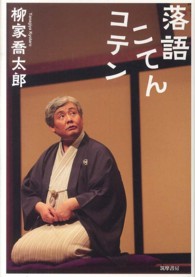
- 落語こてんコテン