
Description
American-Soviet Relations (1993) is a study of American policy towards the Soviet Union from 1917 to the fall of Communism. It attempts to understand what precisely were the roots of the Cold War and an analysis of the later relationship in the light of the Soviet Union’s evolution since the Revolution. It argues that American policy was shaped not only by the external threat from the USSR but also by internal forces within American society, domestic politics, economic interests, emotional and psychological attitudes and images of the Soviet Union.
Table of Contents
1. The Russian Revolution and American Intervention, 1917–20 2. The Era of Non-Recognition, 1921–33 3. From Recognition to World War, 1933–41 4. Wartime Alliance, 1941–5 5. The Origins of the Cold War, 1945–50 6. The United States, the Soviet Union and China 7. The Korean War, 1950–3 8. The Red Scare and McCarthyism 9. The Eisenhower Era, 1953–61 10. Kennedy and Khrushchev, 1961–3 11. Johnson, Vietnam and Czechoslovakia, 1963–9 12. Nixon, Kissinger and Détente, 1969–74 13. The Demise of Détente, 1974–80 14. Reagan and the New Cold War, 1981–5 15. Reagan and Gorbachev, 1985–9 16. The Bush Era 17. The Lessons of History

-
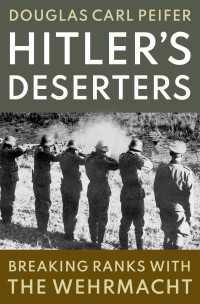
- 洋書電子書籍
-
ヒトラーの脱走兵
Hitler'…
-

- 洋書電子書籍
-
ギリシア悲劇を読む(第2版)
R…
-

- 洋書電子書籍
- 自然は不死鳥の如く蘇るか:自然の哲学<…
-

- 洋書電子書籍
-
3.11後の東京における反原発運動
-

- 洋書電子書籍
- 山下俊一(共)編/甲状腺癌と原発事故:…



