
Description
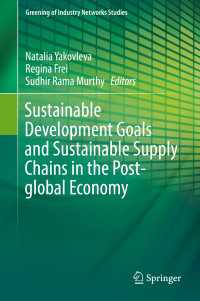
This book offers insight into the use of empirical diffusionist models for analysis of cross-cultural and cross-national communication, translation and adaptation of the United Nation’s (UN) Sustainable Development Goals (SDGs).
The book looks at three social analytical instruments of particular utility for the cross-national study of the translation and diffusion of global sustainable development discourses in East Asia (China and Japan). It explains the underlying hypothesis that, in the transmission and adaptation of global SDGs in different national contexts, three large groups of social actors encompassing sources of information, mediating actors and socio-industrial end-users form, shape and contribute to the complex, latent networks of social engagement. It illuminates how the distribution within these networks largely determines the level and breadth of the diffusion of global SDGs and their associated environmentalist norms.
This book is an essential read for anyone interested in sustainable growth and development, as well as global environmental politics.
Table of Contents
Introduction. 1. The Growing Sustainability Discourse. 2. Social Diffusion of the Sustainability Discourse. 3. Current Developments towards Renewable Energy. 4. Development of Clean Energy in China and Japan. 5. Translation. 6. Multi-Sectoral Interaction for Social Diffusion of SDGs. 7. Corpus Research Methodologies. 8. Sustainable Living Discourse in China. 9. Diffusion of Sustainable Living Discourse in China and Japan. Conclusion. Appendices. References.

-

- 洋書電子書籍
- 環境毒性物質と人体への影響(第4版)<…
-

- 洋書電子書籍
- The Triumph of Doub…
-

- 洋書電子書籍
- 公衆衛生上の政策形成における権力とリス…
-
- 洋書電子書籍
- Ophthalmic Instrume…
-
- 洋書電子書籍
- ポスト・グローバル経済における持続可能…



