
Description
For all men are persuaded by considerations of where their interest lies...Aristotle's Art of Rhetoric is the earliest systematic treatment of the subject, and it remains among the most incisive works on rhetoric that we possess. In it, we are asked: What is a good speech? What do popular audiences find persuasive? How does one compose a persuasive speech? Aristotle considers these questions in the context of the ancient Greek democratic city-state, in which large audiences of ordinary citizens listened to speeches pro and con before casting the votes thatmade the laws, decided the policies, and settled the cases in court. Persuasion by means of the spoken word was the vehicle for conducting politics and administering the law. After stating the basic principles of persuasive speech, Aristotle places rhetoric in relation to allied fields such as politics, ethics,psychology, and logic, and he demonstrates how to construct a persuasive case for any kind of plea on any subject of communal concern. Aristotle views persuasion flexibly, examining how speakers should devise arguments, evoke emotions, and demonstrate their own credibility. The treatise provides ample evidence of Aristotle's unique and brilliant manner of thinking, and has had a profound influence on later attempts to understand what makes speech persuasive.The new translation of the text is accompanied by an introduction discussing the political, philosophical, and rhetorical background to Aristotle's treatise, as well as the composition and transmission of the original text and an account of Aristotle's life.

-

- 洋書電子書籍
-
H.G.ウェルズ著/世界脳(新版)
-

- 洋書電子書籍
- イギリスの「イスラム国」に集う若者のエ…
-
- 洋書電子書籍
-
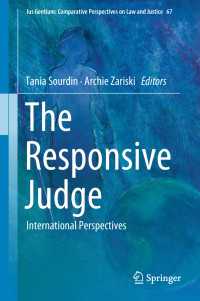
即応力のある司法:国際的視座
T…
-

- 洋書電子書籍
- 星旦二・児玉小百合(共)編/日本の高齢…
-

- 洋書電子書籍
- 河野俊行編/知的所有権における担保権<…



