
Description
Why do American political reform efforts so often fail to solve the problems they intend to fix? In this book, Bruce E. Cain argues that the reasons are an unrealistic civic ideal of a fully informed and engaged citizenry and a neglect of basic pluralist principles about political intermediaries. This book traces the tension between populist and pluralist approaches as it plays out in many seemingly distinct reform topics, such as voting administration, campaign finance, excessive partisanship, redistricting, and transparency and voter participation. It explains why political primaries have promoted partisan polarization, why voting rates are declining even as election opportunities increase, and why direct democracy is not really a grassroots tool. Cain offers a reform agenda that attempts to reconcile pluralist ideals with the realities of collective-action problems and resource disparities.
Table of Contents
1. The ascendancy of reform populism; 2. Reform pluralism; 3. How much transparency?; 4. Participation paradoxes; 5. Reform cycles; 6. Fair representation; 7. Raising the political ethics bar; 8. Election administration or policy?; 9. A blended reform agenda.

-

- 洋書電子書籍
- コナン・ドイル『シャーロック・ホームズ…

-

- 洋書電子書籍
-
中東政治入門(第2版)
An I…
-

- 洋書電子書籍
- アメリカ民主主義における参加型官僚制<…
-
- 洋書電子書籍
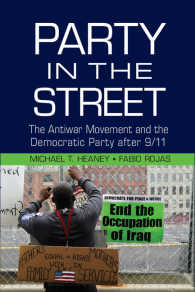
- 9.11後の米国における反戦運動と民主…



